
Start with the decision, not the alert counter
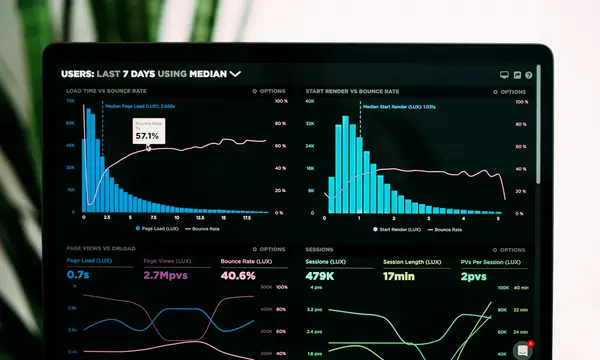
A screen filled with notifications can look like evidence that an AI video system is working hard. It may instead show that people are being asked to review too many ambiguous events. The relevant question is not how many alerts a product can produce. It is whether a defined, authorized team receives information that helps it complete a legitimate task with an acceptable level of error, effort, and intrusion. More activity in a dashboard is not automatically more value.
Begin with a narrow statement of the decision the team needs to make. For an illustrative facilities example, the task could be checking whether a loading-area obstruction requires attention during an agreed period. That statement is different from asking software to interpret every movement across an entire site. A bounded task makes it possible to discuss usefulness, necessary information, review responsibility, and alternatives without assuming that more collection or broader identification is the answer.
Describe the event in ordinary language
Write down what would count as a relevant event before looking at a vendor demonstration. Include the context that makes the event meaningful and the action someone would take after reviewing it. Avoid definitions that depend on a person's inferred intention or a vague description such as suspicious behaviour. An operational team should be able to explain the event to a colleague without relying on an unexplained model score or an impressive visualization.
Consider the difference between a temporarily stationary delivery item and a genuine obstruction that needs a response. The visible scene alone may not supply all the context. A reviewer might need information about an expected delivery window or a maintenance activity. The evaluation should record those dependencies. If the system cannot observe the context that determines the decision, its output should be treated as a prompt for examination rather than a final conclusion about what happened or who is responsible.
Separate detection, review, and action
An automated output is only one part of a working process. Someone must receive it, examine the relevant context, decide whether any action is justified, and record the result. These stages have different failure modes. A technically correct event can arrive too late to help. A clear notification can be overlooked because it appears among many irrelevant ones. An uncertain result can create harm when it is presented as a confident conclusion and acted on without appropriate examination.
Map those stages with the people who would actually perform them. Identify the responsible role, the information required, and the fallback if the service is unavailable. Avoid assigning responsibility to an imaginary person who will somehow monitor everything continuously. A review process needs realistic staffing and authority. If no one can explain what should happen after an alert, the organization is not ready to evaluate whether generating that alert is useful.
Measure the denominator that matters
An accuracy claim is incomplete without a clear account of what was counted. The number of alerts, the number of reviewed clips, the number of relevant events, and the number of operating hours are different denominators. A report that shows only successful demonstrations may exclude the difficult or ordinary periods that create most of the review burden. Ask for separate figures and definitions rather than accepting a combined percentage whose ingredients remain unclear.
In an explicitly hypothetical review, a system produces 100 notifications and reviewers consider 20 relevant to the agreed task. That means 80 notifications consumed attention without confirming a relevant event in this example. It does not reveal how many events were missed, whether reviewers agreed, or whether the relevant notifications were timely. Those questions need separate evidence. The arithmetic helps structure a discussion; it is not a performance result for Face Signature or any other product.
Look for missed events without expanding the purpose
Reviewing only the notifications a system generates cannot establish how often it fails to notify. An authorized evaluation needs a separate way to establish what relevant events occurred within its agreed scope. The reference process should be documented, proportionate, and reviewed for privacy implications. It should not become an excuse to collect unrestricted footage or identify additional people simply because more information might be convenient for the test.
Where real events are rare, a small evaluation may provide limited evidence about missed events. Say that plainly. Do not convert an absence of observed failures into a claim of perfect detection. A controlled, approved demonstration can examine a defined scenario, but it remains different from observing a complete range of real operating conditions. The report should distinguish those evidence types so readers understand what the evaluation supports and what remains uncertain.
Include the cost of human attention
Review time is a real operational requirement. In a hypothetical calculation, 80 irrelevant notifications taking 45 seconds each would require one hour of review. That figure excludes interruptions, escalation, documentation, and the time needed to regain concentration afterward. The relevant cost is therefore broader than the time a clip remains open. Teams should also consider whether the notification workload interferes with other responsibilities that are important to the underlying task.
Ask reviewers what makes a notification easy or difficult to assess. A clear timestamp, an understandable event description, and the relevant context can be more useful than a dramatic interface. Also examine duplicate notifications about the same episode. Counting each duplicate as a separate successful detection can exaggerate apparent activity while hiding repeated work. Report useful episodes and review effort separately when that distinction matters to the organization’s decision.
Treat disagreements as evidence
Two reviewers may reasonably interpret the same event differently, especially when the task definition is vague. That disagreement is not simply noise to remove from the report. It can reveal missing context, inconsistent instructions, or a decision that should not be delegated to the system in its current form. Record how disagreements were handled and distinguish an independent initial judgment from a conclusion reached after discussion.
Use a small written decision guide during the evaluation, then revise it when genuine ambiguities appear. Preserve the fact that the guide changed, rather than silently applying the final interpretation to all earlier results. The aim is a transparent record of learning. A claim that reviewers always agreed is not persuasive if one person supplied all the labels or if uncertainty was forced into a binary choice without explanation.
Ask whether less information would do
The evaluation should examine the least intrusive information that can support the task. An aggregate operational measure, a non-image sensor, a manual inspection, or an existing maintenance log may answer the question adequately. Comparing alternatives does not require assuming that video analytics is unsuitable. It establishes why the proposed information is needed and whether its additional burden is justified by a specific benefit.
If the task concerns an object or a condition, do not casually expand it into identifying people. A system’s ability to offer more features does not establish a need to use them. The ICO’s video-surveillance resources provide UK-specific context for considering personal information in video systems; their existence does not certify a particular deployment. Organizations should obtain advice that fits the actual location, purpose, and people affected before making commitments about lawful use.
Make failure and recovery visible
A useful evaluation includes interruptions and incomplete information. Ask what the operator sees when an input is unavailable, a connection fails, or the service cannot produce a dependable result. A silent gap can be mistaken for a period in which nothing relevant happened. The interface should distinguish uncertainty from a confirmed absence of events. That distinction helps reviewers understand what they know instead of filling missing information with unwarranted confidence.
Recovery should also be understandable. Identify who can report a fault, how an affected workflow continues, and what evidence remains available for a later review. Do not promise continuous coverage when the process depends on services the organization cannot control. A documented limitation is more useful than a broad reliability slogan. It allows the decision maker to consider whether the residual uncertainty is acceptable for this particular task.
Keep change control attached to the result
An evaluation applies to a particular configuration, version, task definition, and period. Changes to any of those conditions can alter the meaning of the result. Keep a concise record of what was evaluated and what changed afterward. A procurement report should not remain attached indefinitely to a product whose relevant components, operating arrangements, or purpose have substantially changed. Evidence needs a boundary as well as a date.
NIST’s AI Risk Management Framework offers a useful general context for organizing the examination of AI-related risks. It is not a product approval and does not replace task-specific evidence. In practical terms, assign an owner to the evaluation record, define when the findings should be reconsidered, and keep unresolved issues visible. A documented question that remains open is more informative than a polished report that makes uncertainty disappear through confident language.
Define stop conditions before a pilot begins
Agree on the conditions under which an evaluation would pause or end. These may include an unexpected privacy impact, an unmanageable review burden, a change in purpose, or a failure to provide the evidence needed for a decision. The conditions should be understandable to the people running the pilot, not hidden in a document no one uses. A pilot is a bounded learning exercise rather than an automatic first stage of a wider rollout.
At the end, report both useful findings and limits. State what the team learned about relevant notifications, missed events, review time, uncertainty, and recovery. Explain which alternatives were considered and which questions remain unresolved. The outcome might be a narrower use, a different approach, further evidence gathering, or a decision not to proceed. A responsible video-analytics evaluation succeeds when it improves a decision, even when the result is fewer alerts, less collection, or no deployment at all.